

Mahsi-Kavush
Mahsi-kavush is one of the most distinctive elements of Uzbekistan’s traditional material culture. This national footwear consists of two components: mahsi, a soft inner shoe made of leather or fabric, and kavush, a sturdier outer shoe worn over the mahsi. Together, they form a practical and comfortable footwear system that protects the feet from external elements while ensuring ease of movement.
Historical Background
The tradition of wearing mahsi and kavush has deep roots in Central Asia and remained widespread until the early twentieth century. These shoes were commonly worn in everyday life, during work, and at ceremonial events. They were handcrafted by skilled artisans known as kavushdoz, who specialized in producing footwear from carefully processed leather and textiles. Today, mahsi-kavush is primarily preserved in museum collections, folk performances, and cultural festivals, where it serves as an important symbol of Uzbekistan’s rich cultural heritage.
Mahsi
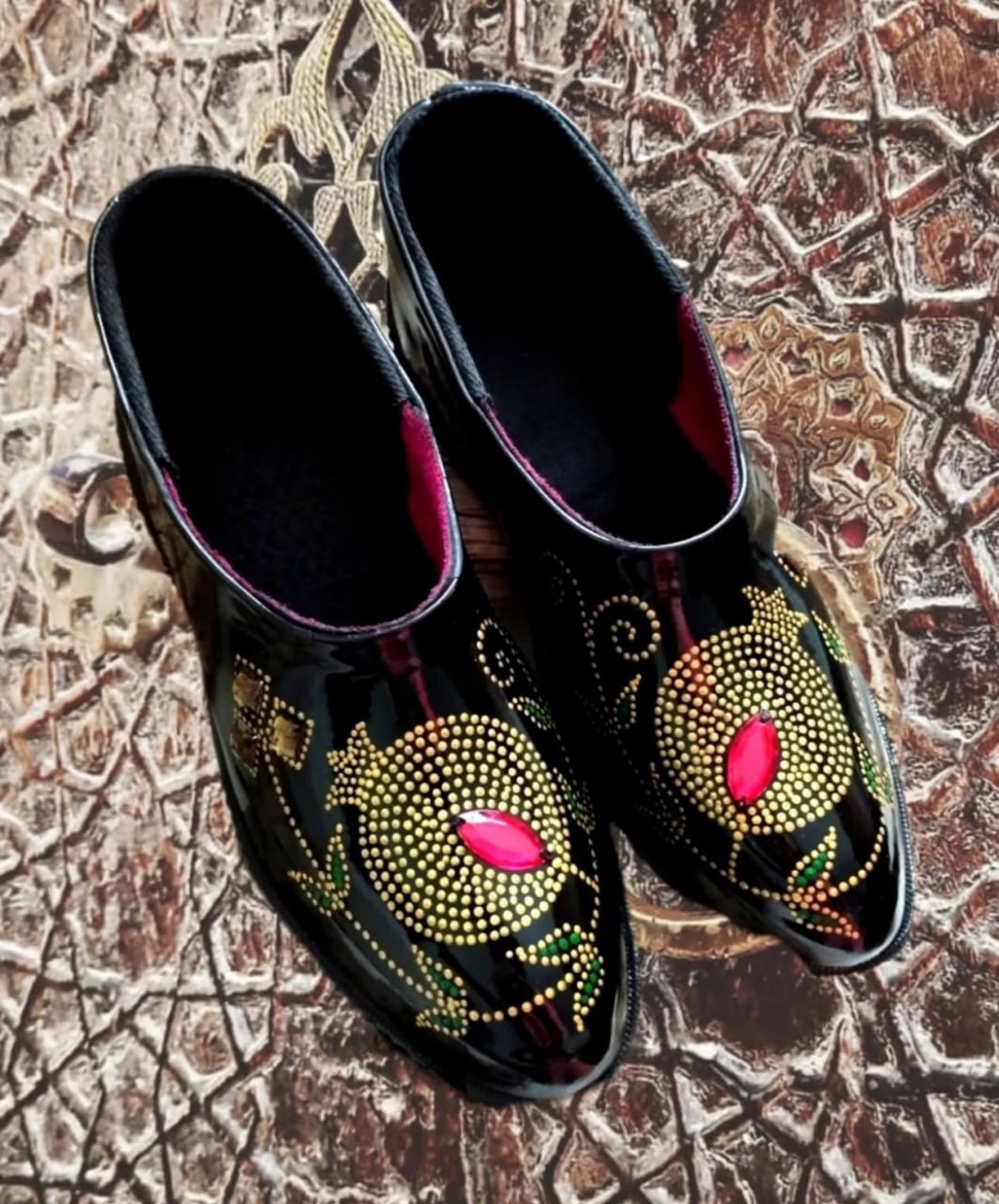
Mahsi is an ancient type of Uzbek footwear characterized by its soft sole and the absence of a heel. Traditionally, it was made from natural sheep or goat leather, although some versions featured silk or cotton linings for additional comfort. The shoe was designed either from a single piece of material or from several carefully stitched sections, ensuring a close and comfortable fit. Its soft sole made the mahsi suitable for different seasons: it helped keep the feet cool during summer and warm during winter. The appearance and decoration of the shoe varied depending on its purpose. Everyday mahsi were usually made of plain leather and had little or no ornamentation. In contrast, footwear intended for weddings and festive occasions was richly decorated. Artisans often covered the surface with satin or velvet and embroidered it with gold or silver threads. In some cases, brocade patterns were also incorporated.
Mahsi produced by the craftsmen of Bukhara and Samarkand gained particular renown for their elegance and exceptional workmanship. Regional variations further enriched the tradition. In Bukhara, gold embroidery (zardozi) was especially popular. In Samarkand, artisans frequently used atlas and adras fabrics. In Khorezm, red women’s mahsi formed an important part of bridal attire.
Beyond their practical function, mahsi also served as indicators of social status. Wealthy families often commissioned highly decorative custom-made footwear, demonstrating both prosperity and refined taste. As a result, mahsi came to be valued not only as footwear but also as works of applied art.
Historical sources frequently mention mahsi, and early forms of this footwear have been identified in archaeological findings and in the famous wall paintings of ancient Afrasiab. Traditionally, mahsi were often worn indoors as well, while a pair of kavush was added when going outside.
Kavush (Kalish)
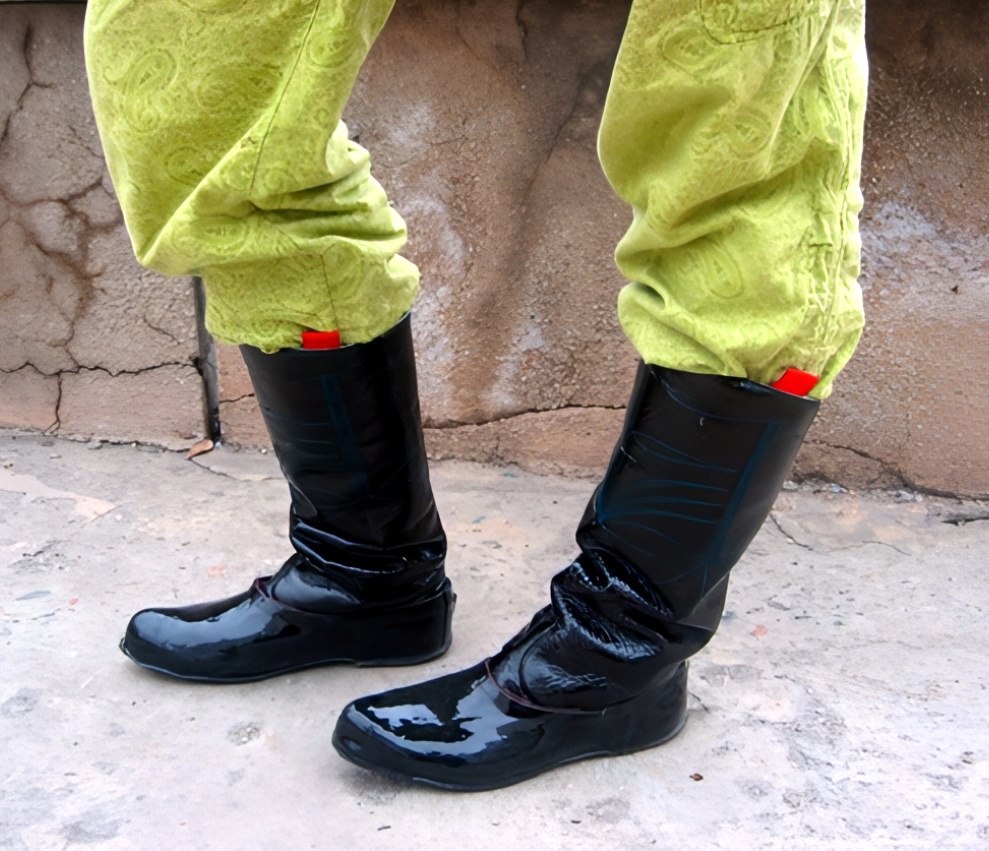
Kavush, also known as kalish or kovush, is the outer shoe worn over the mahsi. It was typically made of sturdy leather and sometimes featured wooden or rubber soles. Its primary purpose was to protect the feet from moisture, stones, sand, and other environmental factors. Because the mahsi was worn inside it, the kavush was designed to be slightly wider. Its toe often ended in a distinctive curved or tubular shape, giving the footwear a recognizable appearance. The design, materials, and decoration of mahsi and kavush varied across different regions of Uzbekistan. In Khorezm, brightly colored wedding mahsi, particularly red ones, were especially popular, while local kavush featured stronger and more durable soles. In Surkhandarya and other southern regions, thicker leather and winter versions were commonly produced. The Fergana Valley was known for its use of colorful silk and atlas fabrics, although the overall form of the footwear remained consistent with broader Central Asian traditions.
The Crafting Process
The traditional production of mahsi-kavush in family workshops and artisans’ studios involved several stages. The process began with selecting and treating leather from sheep, goats, or cattle. The leather was cleaned, softened, and conditioned with oils. After taking measurements, craftsmen prepared patterns and cut the material accordingly. For mahsi, the individual pieces were stitched together, lined, and decorated with embroidery or silk elements. During the production of kavush, a durable sole was created from thick leather, wood, or rubber and then attached to the upper part of the shoe. The final stage included cleaning and decorating the footwear with additional ornaments such as metal or ceramic embellishments, gold thread embroidery, and silk ribbons. Museum collections preserve numerous examples that demonstrate the remarkable craftsmanship of traditional Uzbek shoemakers.
Contemporary Significance
In recent years, interest in traditional footwear has grown considerably. Small artisan workshops and handicraft centers continue to preserve historical techniques while producing footwear for cultural events and tourism. Contemporary designers and boutique brands increasingly reinterpret traditional mahsi-kavush by combining historic forms and decorative motifs with modern materials and fashion trends. Some international designers have also drawn inspiration from Uzbek and broader Central Asian footwear traditions. Although mass-produced footwear has largely replaced traditional shoes in everyday life, ceremonial and decorative mahsi-kavush are still crafted by hand, ensuring the preservation of this unique aspect of Uzbekistan’s cultural heritage.
References
Karimov, A. History of Uzbek Folk Clothing. Tashkent: Fan, 1990.
Rahimov, B. Uzbek National Costumes. Tashkent: O‘zbekiston, 2005.
National Encyclopedia of Uzbekistan. Tashkent: OME, 2000.
Mirzaahmedova, N. Uzbek National Traditions and Clothing Culture. Tashkent: Ma’naviyat, 2012.