

The Jadid Movement in Turkestan
In the second half of the nineteenth century and the early twentieth century, Turkestan was incorporated into the Russian Empire as a colonial territory. The Tsarist administration deprived the local population of political rights, intensified economic pressure, and restricted expressions of national and religious identity. Isolated from the achievements of modern science and technology, the region gradually descended into socio-economic backwardness. It was under these difficult historical conditions that progressive representatives of the local intelligentsia emerged, advancing the idea of national revival and laying the foundations of the Jadid movement.
The social situation of the late nineteenth century created fertile ground for the development of this movement. The majority of the population remained illiterate; traditional maktabs focused primarily on Qur’anic recitation and religious disciplines, while secular sciences were virtually absent. Industry was extremely underdeveloped, and agriculture relied on primitive methods. The transfer of significant land and water resources to Russian settlers further aggravated the economic position of the indigenous population. Recognizing the depth of the crisis, representatives of the national intelligentsia concluded that a new path was necessary — the path of enlightenment and modernization.
A crucial role in the formation of the Jadid movement was played by the Crimean Tatar educator Ismail Bey Gasprinsky. He called upon Muslim peoples to pursue progress and initiated the establishment of “usul-i savtiya” or “usul-i jadid” (“new method”) schools. His newspaper Tercüman became an ideological platform for intellectuals across the Turkic world. Gasprinsky’s slogan, “Unity in language, thought, and action,” inspired the enlighteners of Turkestan as well.
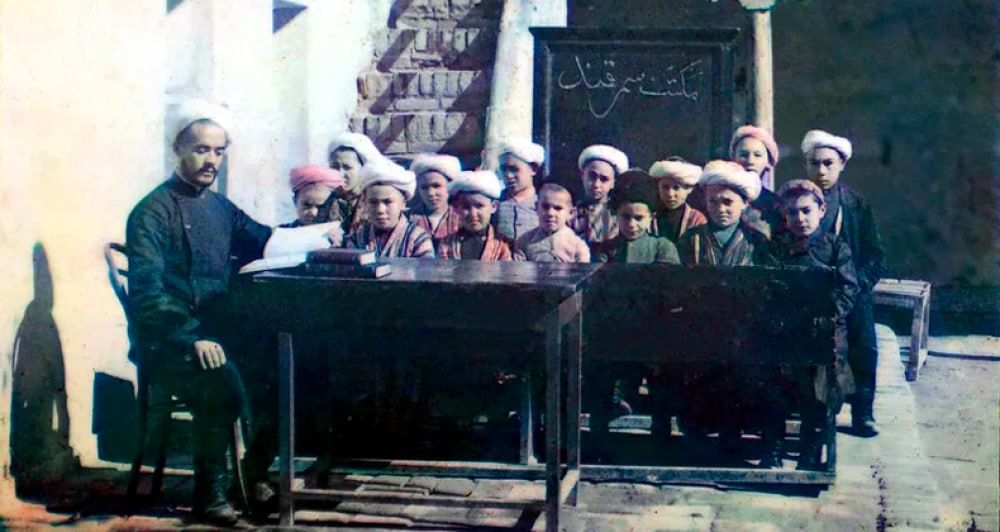
Jadid Schools and New Teaching Methods
The first Jadid school in Turkestan was opened in 1898 in Kokand. Soon similar institutions appeared in Tashkent, Samarkand, Andijan, Bukhara, and other cities. Education in these schools was organized according to the class-lesson system, with scheduled instruction. Although Arabic script was used, the methodology for teaching reading and writing was fundamentally new. The curriculum included arithmetic, geography, history, natural sciences, literature, and other secular disciplines.
Special attention was devoted to the creation of textbooks. Abdullah Avloni, in his works The First Teacher and The Second Teacher, laid the foundations of the modern primary school. Mahmudkhoja Behbudi prepared textbooks on geography and social sciences. These publications played a significant role in shaping a new generation oriented toward modern knowledge.
Attitudes Toward Women’s Education
One of the boldest steps taken by the Jadids was their attention to girls’ education. The enlighteners advocated the elimination of female illiteracy and the active participation of women in public life. In the works of Fitrat, Avloni, and Behbudi, the necessity of raising the social status of women was emphasized. As a result, new-type schools for girls were opened in several regions — a phenomenon innovative and, for its time, revolutionary.
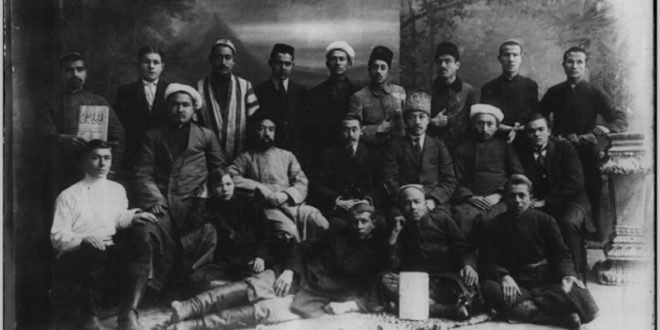
The Press and Theater as Catalysts of Awakening
The Jadids viewed periodical press as a powerful tool of social influence. Newspapers and journals such as Taraqqi, Shuhrat, Sadoi Turkiston, Oyna, Najot, and Hurriyat became platforms for promoting ideas of national revival, enlightenment, and freedom.
At the same time, theatrical art developed actively. The troupe “Turon,” established in 1913, marked the beginning of the national theater. In the plays of Behbudi, Hamza, and Avloni, issues of social injustice, ignorance, and public passivity were raised. Theater became a school of civic consciousness, encouraging audiences to reflect and act.
Political Activity and the Turkestan Autonomy
The February Revolution of 1917 opened new political opportunities for the Jadids. Amid the crisis of the Russian Empire, they united in socio-political organizations to defend the interests of the population.
In November 1917, the Turkestan Autonomy was proclaimed in Kokand. The government headed by Mustafa Chokay, Fayzulla Khojaev, and other leaders of the Jadid movement became a symbol of hope for the democratic future of the region. The autonomy possessed its own parliament, administrative apparatus, and armed forces — the first attempt at democratic state-building in the history of the peoples of Central Asia. However, in February 1918, it was suppressed by Soviet troops.
The Jadids maintained connections not only within Turkestan but also with intellectual centers of the Muslim East — in Istanbul, Kazan, Baku, and Crimea. These contacts broadened their worldview and gave the movement a pan-Turkic character.
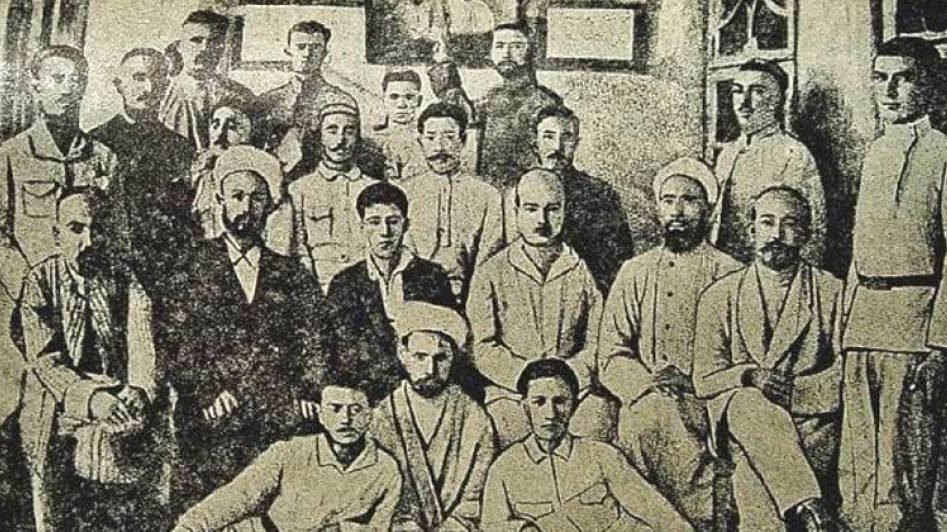
The Period of Repressions and Its Consequences
Initially, the Soviet authorities partially utilized the potential of the Jadids; however, many of them were soon declared “enemies of the people.” In the 1920s and 1930s, Fitrat, Cholpon, Avloni, Munavvarqori, Hamza, Qadiri, and hundreds of other representatives of the intelligentsia were arrested, exiled, or executed.
The repressions resulted in the loss of a significant portion of the region’s intellectual elite. An atmosphere of fear and ideological pressure hindered the spiritual development of society for many years.
The Legacy of the Jadids and Its Contemporary Significance
Despite the tragic events, the ideas of the Jadids did not disappear from historical memory. After independence, their names were rehabilitated, their works republished, and their contribution to national history reassessed. Modern Uzbekistan, in many ways, embodies the ideals to which the enlighteners aspired: an independent state, a developing education system, a national theater and press, and a striving for intellectual freedom.
Although relatively short-lived, the Jadid movement became one of the most intense and significant stages in the history of Turkestan. It redirected society from traditional isolation toward ideas of enlightenment, national self-awareness, and political independence. Today, the legacy of the Jadids represents not only historical experience but also a moral compass for future generations — a symbol of the aspiration for freedom, knowledge, and spiritual renewal.
Sources
Kasimov B. National Revival — Courage, Enlightenment, Devotion. Tashkent: Ma’naviyat, 2002.
Hasanov B., Karimov N. Ideological Foundations of the Jadid Enlightenment Movement. Tashkent: Ziyo, 2016.
Alimov M. The Jadids and Their Role in the National Revival Movement. Tashkent: Ma’naviyat, 2013.
Ziyoev X. Russian Aggression in Turkestan and the Struggle Against Colonial Rule. Tashkent: Sharq, 1998.