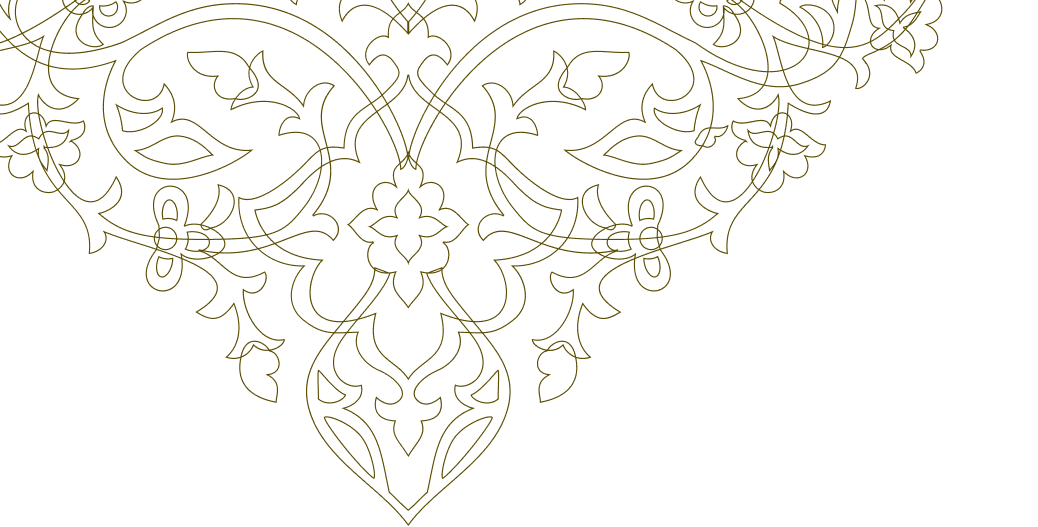
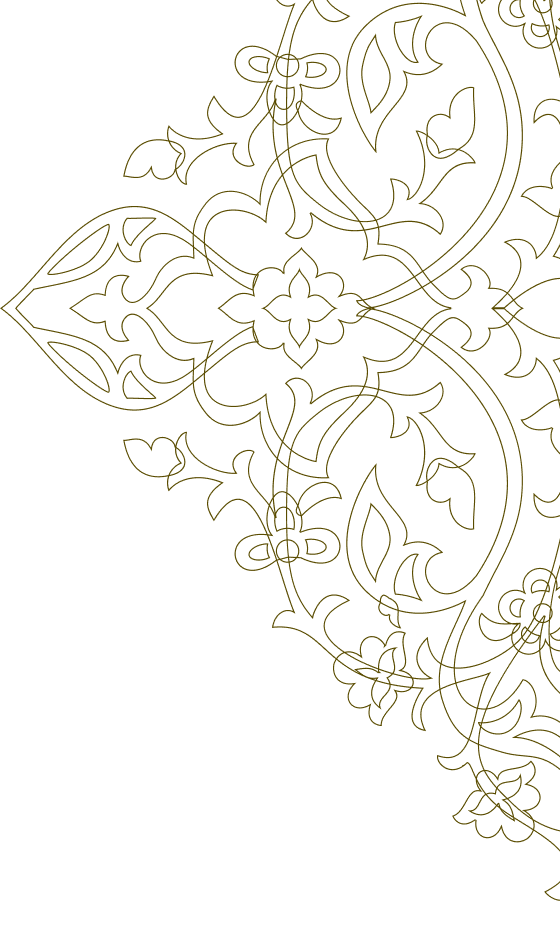
Stucco reliefs
Stucco reliefs, or ganchkorlik, is a form of artistic craftsmanship associated with the processing of ganch (alabaster) and represents an important facet of traditional applied art. Among the various branches of decorative and applied creativity, ganchkorlik is most closely linked to architecture. From ancient times, stucco reliefs has adorned palaces, mosques, madrasas, and the homes of wealthy townspeople. As an art of the East, it was widely practiced across Central Asia, Iran, Turkey, and Arabia, where it was employed for the decorative embellishment of buildings.
Ganch was used in interior finishing, the creation of architectural elements, plastering of walls and ceilings, as well as the production of relief ornaments and carved patterns. Within ganchkorlik, two primary decorative techniques are distinguished:
- Oymakori — the wall is coated with alabaster plaster, after which a pattern is carved into the designated area.
- Qolipaki — pre-formed alabaster ornaments are cast in molds and then mounted on surfaces, allowing for the mass production of decorative elements.
The ease of working with alabaster contributed to the development of this craft as an independent art form, closely tied to both architecture and visual arts. Alongside stone, brick, ceramics, and wood, alabaster has been used in construction since ancient times. Its soft texture and ease of carving contributed to the widespread popularity of stucco reliefs.
History of Ganchkorlik
Some of the earliest examples of this art are the exquisite carved ganch decorations found in the halls of the Toprok-Kala palace (3rd century ). In Varakhsha (7th–8th centuries), remnants of the Bukhara palace have yielded carved representations of birds, animals, fish, as well as floral and geometric motifs. By the 13th century, the art of ganchkorlik reached a new height, as evidenced by finds in Afrasiab.
The craft flourished most prominently in the late 18th and early 19th centuries, during which all types of ganch carving were actively developed. Folk artisans freely employed bright colors to enhance the brilliance of patterns. Clear compositional principles were formulated, becoming characteristic of all forms of decoration.
Schools of Ganchkorlik
Distinct regional schools emerged in Tashkent, Samarkand, Bukhara, the Fergana Valley, and Khiva, each with unique stylistic features:
• Bukhara School: distinguished by complex techniques, sophisticated methods, and a rich color palette.
• Samarkand Masters: worked in a style similar to Bukhara, often employing stalactite-style carving to decorate the upper corners of walls with intricate panels.
• Tashkent School: favored vegetal and Islamic motifs, resembling the style of Fergana artisans, often creating so-called “vegetal chains.”
• Kokand and Khiva Masters: known for complex geometric patterns with refined symmetry.
In the 1990s, Tashkent saw the rise of a high-level school (“Usto”), whose masters contributed to the decoration of interiors in buildings such as the Oq Saroy residence, the Supreme Assembly, the Turkiston Concert Hall, the State Museum of Timurid History, as well as theaters and metro stations. Today, ganchkorlik continues to hold an important place in Uzbekistan’s decorative-applied arts, and works by its masters are in demand internationally.
Symbolism of Ganchkorlik Motifs
- Geometric Motifs:
Equilateral triangle — upright symbolizes the beginning of life, inverted — its end;
Isosceles triangle — separation;
Quadrilateral — four cardinal directions, celestial palace, son of the sun, eternity, light, stability;
Rhombus — woman, mother earth, fertility;
Circle — world, happiness, sun, protection from evil;
Five-pointed star — brevity of life, “five-day world”;
Semicircle — happiness;
Crescent — symbol of Islam;
Sun — symbol of life.
- Floral Motifs:
Almond — happiness and prosperity;
Leaf — spring renewal;
Pepper — protection from evil and the evil eye;
Barberry flower — calm and longevity;
Pomegranate — goodness and abundance;
Quince flower — happiness;
Scroll — wealth;
Apple — love;
Sprout — prosperity;
Hyssop — protective charm;
Rose — beauty. - Birds and Animals:
Lion — courage and strength;
Fox — cunning;
Ant — wisdom and modesty;
Nightingale — fidelity;
Huma bird — brings happiness;
Owl — misfortune;
Fish — vigilance;
Mouse — fertility of domestic animals;
Goat or ram horns — bravery and purity;
White dove — peace;
Gazelle — beauty and grace. - Color Symbolism:
Green — nature;
Blue — sky, peace, protection from evil;
Red — victory, joy;
Yellow — sanctity;
Black — mourning;
Yellow flower — separation;
Indigo — supreme faith;
White — purity, light, happiness, and luck.
References
- Bolatov, S. Uzbek Folk Applied Decorative Arts. Tashkent: Mehnat, 1991.
- Ganchkorlik End File (YouTube)
- “Cradle of Values” | The Art of Ganchkorlik (YouTube)