

The Ritual “Message from the Snowdrop”
Historical Roots of the Tradition
The word boychechak (snowdrop) comes from the Old Turkic language, where boy meant “sacred,” “rich,” or “taboo” — in other words, something dedicated to spirits, offered in sacrifice. The second part, chechak, means “flower.” Similar constructions can be found in words like Boybo‘ri (“sacred wolf”) or Boyko‘l (Baikal — “sacred lake”). Thus, in its etymology, boychechak literally means “sacred flower.”
For this reason, throughout history, the customs, rituals, and beliefs associated with the snowdrop have carried a magical-ritual significance and have been closely linked to the idea of fertility and renewal.
The ritual known as Boychechak xabari (“The Snowdrop’s Message”) or “Snowdrop Festival” was traditionally held as one of the celebrations preceding Navruz. The first appearance of snowdrops was seen as a harbinger of spring and the end of the harsh winter days. Elderly and infirm people gratefully accepted snowdrops brought by children, touching the flowers to their faces as if breathing in the scent of the coming spring. They expressed thanks for surviving the winter and living to see another spring, saying:
Omonlik, omonlik, hech ko‘rmaylik yomonlik, yanagi yil shu kunlarga eson-omon yetaylik! Og‘irligim yerga, yengilligim o‘zimga
“May there be peace and well-being, may evil pass us by. May God allow us to reach these days again next year. Let my burdens sink into the earth, and my lightness remain with me.”
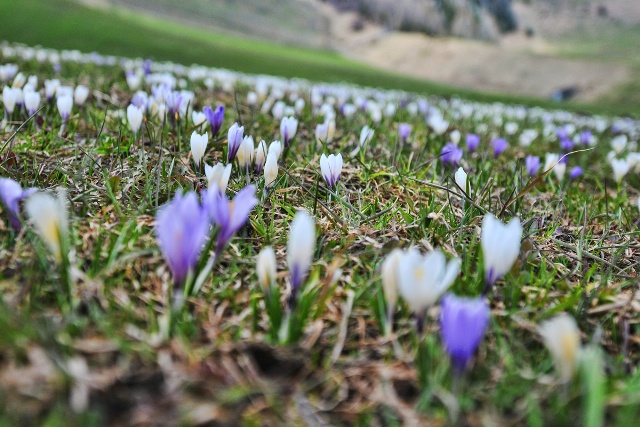
The Snowdrop’s Message — A Harbinger of Goodness
In the early 20th century, in the Beshyog‘och district of Tashkent, the blooming of snowdrops became a joyful event for children. Groups of 8–10 youngsters would go out to pick the flowers, then walk through the streets bringing boychechak to elderly and chronically ill residents of the mahalla (neighborhood).
Approaching a house, they would sing:
Boychechagim boylandi,
Qozon to‘la ayrondi,
Ayronindan bermasang,
Qozon-tovo‘ging vayron bo‘ldi.
“My snowdrop has blossomed,
Your cauldron is full of ayran,
If you don’t share your ayran,
Your pots and pans will be empty.”
And another rhyme:
Qattiq yerdan qazilib chiqqan boychechak,
Yumshoq yerdan yumalab chiqqan boychechak.
“Snowdrop that broke through hard earth,
Snowdrop that rolled out of soft soil.”
If the hosts were busy and did not come outside, the children chanted playfully:
Ovratmang, ovratmang,
Bolalarni jovratmang!
“Don’t hide away,
Don’t upset the children!”
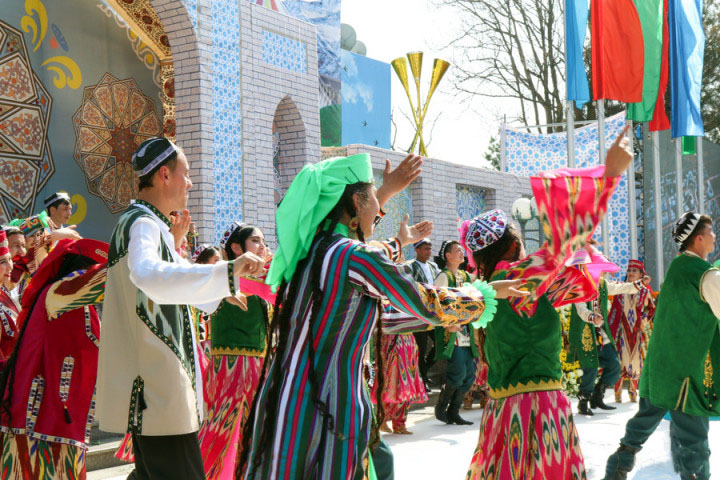 Local Variations in the Foothill Villages
In the foothill villages of Tashkent region, the Snowdrop Festival had a distinct local flavor. Children gathered bouquets of white blossoms, divided into groups, and went from house to house singing:
Adirlar to‘la chechak,
Biz keldik ucha-ucha.
Boychechagim, boychechak,
Kutib oling, hoy chechak!
“The hills are full of flowers,
We are flying like birds.
My snowdrop, snowdrop,
Welcome us, O flower!”
In gratitude, the hosts touched the flowers to their faces, performing a symbolic act of purification, and said:
Omonlik, omonlik, ilohim hech ko‘rmaylik yomonlik!
“May there be peace, may there be no evil, and may God protect us.”
They would then treat the children to sweets or homemade delicacies. The happy children sang blessings in return:
Boychechak keltirdik eshigingizga,
Xudoyim o‘g‘il bersin beshigingizga.
“We brought snowdrops to your doorstep,
May God grant your home a son.”
Sometimes they sang a more poetic wish:
Hurli bo‘ling, hurli bo‘ling,
Boychechakday gulli bo‘ling,
Kelasi yil shu mahal,
Qo‘sh kokil o‘g‘illi bo‘ling!
“Be as lovely as a fairy,
Blossom like the snowdrop,
And by this time next year,
May you cradle a healthy baby boy!”
Symbolism of the Snowdrop
It was believed that when the snowdrop blooms, it is a sign that “those who have passed away are still with us” — a metaphor for renewal, continuity, and the unbroken cycle of life. For this reason, children tried to gather as many flowers as possible and share them with everyone in the village, spreading joy and blessings.
Sources:
- Juraev, M. Folklore of Uzbek Seasonal Rituals. Tashkent: Fan, 2008, p. 294.
- Song Boychechak (adaptation by Sh. Yormatov for children’s choir, 5th grade, karaoke version).