

Atlas
Atlas: The Art of Silk in the Pattern of Time
Atlas is a smooth, single-faced fabric woven from natural silk. What distinguishes it is a unique dyeing technique known as abrband—a complex resist-dyeing method that gives the fabric a painterly rhythm and vibrant color play. Through special finishing, the fabric acquires a signature sheen and iridescence. In the past, this was achieved by striking the fabric with special sticks to create a glossy surface; today, the atlas is passed through a heated glazing drum, known as a calender.
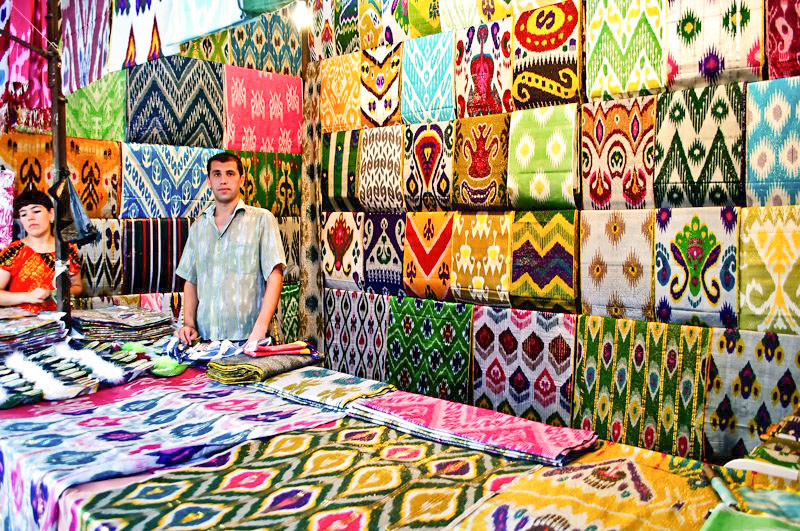
Traditional Uzbek atlas fabrics are renowned for their vivid color palette and sophisticated patterns where color and form blend harmoniously into a unified, dynamic design. The most refined and valuable type is khan-atlas—an eight-shuttle atlas handwoven on a loom equipped with eight foot pedals (tepki). The beauty and uniqueness of this fabric lie in the complexity of its weave and structural technique.
For centuries, atlas has remained an essential element of Uzbek culture. Women wore atlas garments on festive occasions and weddings; the fabric was part of a bride’s dowry, adorning both the bride herself and the rituals surrounding her marriage. Beyond Uzbekistan, atlas is also a traditional component of the Tajik national costume. Its status extends beyond that of a decorative fabric—it is a cultural symbol of prosperity, beauty, and respect for tradition.
From Weaving to Heritage
Originally, atlas was woven manually on primitive wooden looms. Today, it is produced using both hand and machine looms. The fabric is used for women’s dresses, bedspreads, cushions (kurpa, kurpacha), and also for elements of men’s clothing and household items.
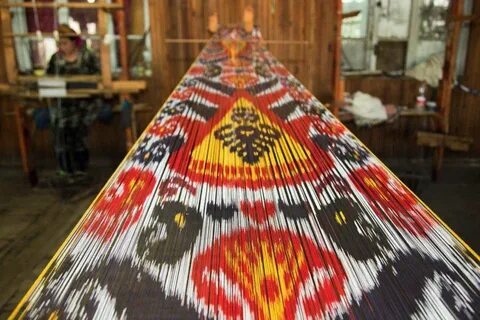
Since ancient times, the city of Margilan has been the center of atlas production, from where the techniques and aesthetics of atlas weaving spread throughout Central Asia. Four-shuttle atlas is made on looms with four pedals, while khan-atlas requires looms with eight tepki. During the weaving process, every eighth warp thread (tanda) is lifted in a specific sequence using special levers and interlaced with the weft—cross threads. Pressing the first pedal opens the first shed, through which the first weft thread is passed. Then the second pedal is pressed, and the next shed opens—and so on, up to eight times. The result is a smooth, single-faced fabric with a unique design.


The Most Famous Types of Uzbek Atlas:
• Qora Atlas (“Black Atlas”)
• Chaqirim
• Shakhmat (“Chess”)
• Qora Ko‘zim (“My Black Eyes”)
• O‘zbekiston Go‘zali (“Beauty of Uzbekistan”)
• Margilan, Bibikhonim, Begoyim, Kelinchak Atlas (“Bride’s Atlas”)
• Bargi Karam (“Cabbage Leaf”)
• Namozshomgul, Guldasta, Navruz, Qo‘chqorshoh, and others.
Each name reflects layers of history, regional aesthetics, and cultural meaning. Atlas is not just fabric—it is a woven chronicle of Uzbek identity.